Sunday, November 23, 2014

Will Chilliwack ever become a Smart City?

With the municipal election done and a newish city council in place many of us are exhaling and preparing to just go about our business for the next four years. Bad idea. This is the time to connect with the city councillors -- old and new -- and school board trustees -- mostly old -- and let them know what is expected of them.

Yes, I know, they may not listen. I know, I know, most don't respond to emails and are all but invisible post election to about six week pre-election. I say don't let that stop you. Tell 'em what you hope for, want and expect and keep telling them.

I expect hope for a few things.

1. I hope that we move toward being a smart city, a connected city, a transparent city.

2. I hope that we add the two missing councillors - maybe that way they will have time to be smarter, more connected with the populace and transparent.

3. I hope that we take a play from Whistler and ban candidate signs for the next election. There are lots of other ways to broadcast information about candidates and the election.

4. I really, really, hope that for the next election Chilliwack resident's will get the same level of information from city hall that voters in some other municipalities received. Several cities provided full voter information brochures in print and on the city websites that included candidate submitted bios and statements with links to the candidates website and social media accounts.

Being a Smart City


I was just reading this post about Vancouver being chosen as one of the world's Smartest Cities.

Like Copenhagen, its credentials as a green city are quite evident. In fact, Vancouverites participated en masse in a program to develop a long term strategy for the city which resulted in an ambitious (and probably unreachable goal) of becoming the greenest city in the world by 2020. It helps that 97% of all energy in Vancouver comes from renewable energy sources (mostly hydro). Vancouver was also a pioneer in providing major incentives for green buildings which helped to foster an entire ecosystem of green building expertise from architects and engineers to producers of building products. quote context: http://pllqt.it/X7gVwa
What caught my attention was the end of the post where the challenges were listed.
In order to stay competitive on a North American and global scale, Vancouver will need to continue to invest in digital technologies and support the rollout of broadband throughout the city. quote context: http://pllqt.it/tkxrH0
This reminded me of a bit of discussion that took place during the Chilliwack campaigns. The energetic senior, Mr. Harrington said,
'My proposal to build a fast and free municipal WiFi network for Chilliwack is a new idea that would help entrepreneurs build new businesses and create jobs just as much as it would help seniors and students,' explained Harrington." quote context: http://pllqt.it/wwstNf
I almost voted for the man just because of this although his reasons for city wide connectivity missed some of the real potential. Unfortunately he lost my vote with his clean sweep mantra. I believe his intentions were good but he missed the mark. I expect council members to demonstrate civility and an overt willingness to work together. Collaboration trumps technology in my book. However, credit where it's due. Looking at expanding our technological infrastructure with city-wide broadband is a damn fine idea.

Moving on and connecting the dots - city-wide broadband means access to data, including big data, and access to data means potentially more knowledge and more knowledge means better informed decision making. Big data can illuminate patterns (traffic, human  foot movement, crime, etc) that we humans just aren't privy to. See more about cities and technoloy in this MIT article Cities Find Rewards in Cheap Technologies.

Transparency and Inclusiveness


There is an adage in communications that the quality of communication is determined by the receiver. Just because you publish a report on something doesn't mean that you have adequately shared it. The folks at city hall ought to remember that they do indeed work for the people. Like all employees, it's on you to report out in a way that your employer can understand. Understand? 

What do council members do?


I dug around quite a bit before the election to try a figure out what the council members do - or rather did - during their last term. It was hard! I still have no idea what a few of them did. Ok, they showed up. And they probably read a lot of really long, dry, documents and reports. It was clear that some did more than others. Do they get paid differently?

I asked the mayor about this apparent inequity and she said she looked at what each council person was interested in and then she assigned them to committees. She also said that some where on fewer committees because they had "job commitments". So, some counsel members get to do less for the city because they have jobs. They all have jobs outside the council job, don't they? Sorry, still don't get it. 

Seriously, I want to know what city councillors are doing. That goes double for the mayor. I suggest a blog. It not unheard of in municipal politics. Do a blog and let me subscribe to it so it comes to me, in my preferred inbox, regularly. A mailing list would be a darn fine idea too. 

I'd also like to see more fully online options available for committees and decision informing groups. I have time, energy and knowledge to contribute yet I have yet to make it onto a committee. I never get invited and the application process is really intimidating. Plus, I work in Vancouver so am only home on weekends. I am however free to contribute, online, almost every weekday evening. Bet there are many more like me out there.

I would also like to see all eight council positions used. Anyone who does group work knows that six is too few for a healthy and effective group process. Eight is better, twelve is ideal but eight will do. The higher numbers make it more likely that diverse ideas will be heard and less likely that the group will be controlled or biased from within.

Can we do better than "Where Business Grows"?


Is that the vision? Or was it a tag line? I can't tell. I just looked at the city website and the vision and goals are still really hard to dig out. I actually know more about Vancouver 's vision than Chilliwack's.

In 1972 the Club of Rome and MIT published a report called Limits to Growth. In the report they said that we live on a really small planet with limited natural resources and we better smarten up. A few years later they published a second report called No Limits to Learning. That report said that even though there were limits to growth, there were no limits to our capacity to learn. They went on to say that there are two ways we could learn. We could learn by shock -- Doh! You do have to change the oil in your car. Or we could learn by innovation. To learn by innovation requires they ability to anticipate what might be -- systems thinking -- and participation -- diverse minds, collective intelligence and getting everyone informed and involved in finding solutions.

I would much rather our vision be of a learning community than a business friendly community. I don't want Chilliwack to grow, I want us to grow smarter together. Plus, the closer we get to the 100,000 mark the further away we get from the small, safe and quasi-farming community I fell in love with 25 years ago.

In biology cells divide when they reach a certain size. In the wild animals that live communally self-regulate the size of the group. Humans, in all our brilliance, strive for bigger regardless of the cost. How dumb are we, really?

Use Your Voice


Ok, that is my rant, along with a healthy dose of hopes and a few expectations thrown in for flavour.

Please tell our mayor, council members and school trustees what your hopes, wishes and expectations are. Tell them, tell them and tell them again. At least then they can't say they didn't hear from anyone.

Mayor and council contact information is here.  School board trustee contact information is here.


Monday, November 10, 2014

Pass the Vote Chilliwack

Dear Friends and Neighbours,

As you may know, this Wednesday Nov. 12th (Advanced Polls) and Saturday Nov. 15th (General Election Day) are your next opportunities to cast your ballot for this year’s Municipal Election.

I would like to STRONGLY encourage you to exercise your right to vote for your next Mayor, City Council, and School Trustees. 

Did you know that a few weeks ago in the City of Toronto, the voter turnout was 61%? That is staggering! In the past Municipal Election, Chilliwack had a voter turnout of only 17.5%.

We need to do better! In the past, civic elections voted candidates in for a 3-year term. In 2014, successful candidates will be voted in for a 4-year term.

In Chilliwack there are:


  • 3 Mayoral Candidates 
  • 17 Council Candidates 
  • 13 School Trustee Candidates 


So how do you make an informed decision?

Many of the individual candidates have their own websites. Want to know about a specific candidate? Just Google their name and if they have a site, it will pop up. For a quick reference, click here for a list of all your Chilliwack candidates. The Chilliwack Progress also has a page dedicated to candidates. You can also review a Storify of the Tweetup that several of the more technically brave candidates participated in.

You get what you vote for. 

Does your one vote matter? Absolutely!! It will matter even more if you encourage family, friends and neighbours to get out and vote with you.

I am personally supporting Jason Lum for Chilliwack City Council. 

Jason is truly an authentic and caring person. He is genuinely interested in what people have to say. He has a strong work ethic, and is committed to families, businesses, and to the betterment of this community. If you’re like me, these are the attributes to look for in our community leaders!

Please visit http://www.jasonlum.ca/ for more info.

And VOTE!


Saturday, November 01, 2014

The Chilliwack ValleyVotes Tweetup

This was Chilliwack's first ever Tweetup, held by a non-candidate. During the last municipal election Jason Lum held his own twitter chat but this is the first one that was organized to allow all candidates a public platform to engage with Twitter using citizen. Kudos to the Chilliwack and District Real Estate Board for organizing and facilitating the event.

Lessons learned


It would have be awesome to have a page on the ValleyVotes website that had some general instructions and guidelines for both the candidates and the folks participating in the chat. Leading up to the event the rallying call was to "ask your candidates anything" or something to the effect. Once we began it looked like the organizers wanted to ask their questions first. The result was they just got ignored as participants launched questions. Doh! Sorry :-/

Many of the candidates answered questions directly without adding the hashtag and in some cases didn't include enough context in their responses. That has made it difficult to go back and follow the conversations. Twitter chats are a bit of an art form and it was clear who had experience in Twitter's fast-paced and minimal-character-allowing environment. It was also clear who could spell and type well lol (I can't point fingers there, I am notoriously bad at both).

Going forward

One thing I had hoped for was for the candidates that did participate - many were a no show - would have collected all the great questions and taken time to respond on their own websites. They could have done this really easily with Storify or with numerous other free apps. They could have even done it the old school way by just copying and pasting the questions and their responses into their webpage. As much as I love social media I would rather go to a website and get information about a candidates. I really dislike Facebook and that, it seems, is where a lot of the longer form information from and about candidates is being shared.

Anyways, for what it's worth, here is an edited (I removed duplicate tweets) version of the Tweetup.


Wednesday, October 22, 2014

Chilliwack Municipal Election Candidates in KUMU

Still trying to find a way to make sense of candidates information. Click on the circles to see info displayed in left sidebar. This is a work in progress and I used mostly the data from Civic Info BC. With a little luck I may have this done before the polls open lol

Hint: To see the map only, without the sidebar, click on the three small vertical dots in the centre. Click on the little funnel icon - bottom right - to change the filter to show more or fewer candidates.

Michael Kha is the only candidate with a picture because KUMU pulls gravitars automatically and his is the only one it found..


Tuesday, October 21, 2014

Chilliwack Candidates - where art thou?

Candidates? Hello? Are you out there?

Update: Since last I looked the city has added links to Civic Info BC that includes contact information about candidates.

Mayor and council candidates are here.
School trustee candidates are here.
Parks Board candidates are here.

List of candidates is here.

I really appreciate that this has been done. I am less appreciative of the lack of promotion or that after a very long conversation with the Mayor and the city communications person about the need for this, that nothing was passed on. Lack of follow through sends a very clear message.


My kids don't vote in municipal elections. They are in their 30's, own homes in Chilliwack and between them have five children in Chilliwack public schools. I decided that this election would be different. So, I asked them - What will it take to get you to the polls?

The answer was pretty basic and not a huge surprise. They both said they'd vote if they knew who the candidates were... and by who they meant more than just their names. They both also suggested that finding out who the candidates were through online means would be better. So off I went, hunting down the info that would get them to a point where they felt informed enough to vote.

I got a bit sidetracked trying to find out what existing candidates had been up to since 2011. That's another story. Eventually I ran out of time and patience trying to locate all the candidates online presence - clearly many do not have any kind of online history or social media accounts recognized by Google - and I created a form they could fill out. I began with a Google form and after some challenges with that moved to SmartSheet (I really love SmartSheet).

This is what I came up with. The link to the form is here and embedded below. And the live results are here.

If you are a candidate in Chilliwack can you help out by filling this in. If you know a candidate in Chilliwack can you point them this way?


Thursday, October 16, 2014

Making it easier for Chilliwack voters

Over the weekend I did some digging into the information available for voters in Chilliwack. It was hard work. Too hard really. The objective quickly became - How can I make this easier for people? Not that I think people need easy so much as I think most people are really jammed up for time. Removing barriers to finding information in order to make an informed decision about voting is one way to reduce the time challenge.

What have the current city leaders and board members accomplished?

That was my starting point. I went to the Chilliwack website and did some searching and digging and then more searching. What I found was some basic information about the councillor's official activity over the past three years.

Click here to open the above sheet.


Next I assigned points. Not really fair as the activity is mostly assigned by the mayor. Regardless, it's something to inform the larger picture.

Click here to open the above sheet.


Reporting challenges

As you can see city councillors are pretty busy. Some more than others. What's missing is an indication of what they have done on each of these committees and boards. My thought as I was going through this process was that if this was an organization each person would have reports, maybe a work plan and outcomes linked directly to goals and objectives. In short there would be evidence of accomplishments.

I did find a report, of sorts, on the city web site and was directed by Mayor Gaetz to another, more recent report similar to one I had found. Viewing that report inspired a post about how to write and report out on goals and objectives. It also ignited a lot of discussion with some of my colleagues.

The problems with small

I work with several brilliant and politically savvy people so I asked them to weigh in on the challenges that municipality experience. What we came up with was the problem of small. Smaller municipalities have fewer resources and few people to draw on. Often getting it done shoves the finer process details out of the way.

At the provincial and federal level you are more likely to find professional politicians who hold MBAs and other leaderly degrees. That doesn't make them better than our local folks. It does make it more likely that they are well versed in governance processes and norms. Local leaders tend to have a solid grounding in business but not necessarily in areas like organizational design or leadership studies.

My point here is that this isn't an exercise in pointing fingers. It is a discussion about the very real capacity challenges that plague municipal politics.

Candidates - where art thou?

The final thing I struggled through over the weekend was trying to locate the candidates, both returning and new. There are a lot of them and that's an awesome thing. The shear number suggested that I had to find a way to gather up all their online points of contact. This is what I came up with. The link to the form is here. And the results are here.


You can help

Please point this out the folks in the running that don't spent enough time on Twitter to have seen the tweets asking for their input. And share the information with your friends, relatives and neighbours who are looking for more information about the candidates. Make it easy for them, please.


Sunday, October 12, 2014

Chilliwack Municipal Election 2014 - On Responsibility


This years municipal election looks like it will be a bit more competitive than the last few years. There are multiple candidates for mayor and a whopping 17 candidates have tossed their hat in the ring for six council seats. You can find the full list here.

Competition can be a good thing. Competition can bring out the best in people. Competition can also unveil flaws, like unproductive mental models, beliefs and agendas.

An election can also bring out voter's mental models, beliefs and agendas. A couple of weeks ago I posted a few tweets about My Voter Declaration. Candidates were declaring so I thought I would too. Some of the rationale for this comes from my practice of working out loud. It's about being transparent and sharing ideas freely. Other reasons for this were to keep myself accountable - publicly saying you are going to do something is one way to put pressure on yourself to do that something - and to give fair warning to candidates that I will be asking questions and that I, and I assume many others, expect intelligent responses. Lastly, the My Voter Declaration tweets are a direct reflection of my beliefs about democracy, responsibility and citizenship.


Responsibility and citizenship in a democratic society


I have some chosen beliefs. I chose these beliefs because I know that beliefs drive behaviours and I choose to behave in certain ways. My goal is self-actualization and no, I haven't achieved it yet but I'm still trying. 

Beliefs drive behaviours


I believe we are all connected. I also believe we are all responsible... for everything. How this translates is that I believe that I am personally responsible for what goes on in my neighbourhood, my city, my province, my country and my world. It's a personal responsibility. This isn't an original idea. Others have expressed this belief most eloquently - 

Until the great mass of the people shall be filled with the sense of responsibility for each other's welfare, social justice can never be attained. Helen Keller

I believe that every right implies a responsibility; every opportunity, an obligation; every possession, a duty. John D. Rockefeller, Jr.

Responsibility does not only lie with the leaders of our countries or with those who have been appointed or elected to do a particular job. It lies with each of us individually.  The Dalai Lama

So, really, it's all about me. My responsibility to do what I can, when I can, where I can. I also believe that we can only control our own actions. Despite knowing we can't control others I still hold those in (paid) leadership positions to a  high standard.. or at least I have an expectation that they too will go about their jobs with an underlying belief that they are responsible.

Why taking responsibility matters

Taking it personally and being personally accountable and responsible for what goes on in our world makes it more likely that we
  • pay attention, 
  • play a part, 
  • get involved 
  • display empathy, and 
  • act with the greater good in mind. 

Accepting personal responsibility also makes it really difficult to shift blame. If I'm responsible and I see something wrong my first reflex is to do something myself. I believe this is critical. That first reflex may lead me to seeking other to help. I am quite aware of my own limitations and extend that knowing to others. We are, after all, only human. 

I also believe that we are responsible for ourselves so taking on the weight of the world is not a realistic goal. There is a balance, a sweet spot in the centre, where we can be responsible without the need to control. Where we can allow ourselves to be connected without assuming the combined pain of the world. 

How this plays out for me is in knowing that crime, for example, is something I'm complicit in. I understand the nexus of crime and I know that every time I fail to reach out, to include, to assist a child or family in distress, I become complicit in the creation of a future criminal. I, and society, creates criminals,. Very, very few people are born to be antisocial. So, I am responsible. Believing that makes it more likely that I will reach out, connect, and in a healthy way, help when I can. 

Reverse engineering - behaviours to beliefs


Knowing that beliefs - and mental models - drive behaviour, it's pretty easy to reverse engineer a persons behaviours to uncover their beliefs. When I say behaviours, I mean anything you can see or hear. Language is great tell when it comes to unearthing what an individual really believes about the world, other people, and his/her place in it.

Some of the conversations on Twitter of late have exposed the underlying beliefs and mental models of several of the candidates. One Twitter thread prompted me to post this:


Of course the challenge with reverse engineering in humans is that intent can be hidden. I'm sure most if not all of the candidates have the best of intentions. I am not quite as convinced that they all hold beliefs that include personal responsibility, transparency and participatory decision-making - all big issues for me.

Ok, that's it for me, for now. In the coming weeks I'll be posting questions for candidates and will try to summarize responses in the blog.

My question for voters - What's your declaration? What will you commit to?


Saturday, January 11, 2014

My Top Tweets in 2013

It's always interesting to occasionally look back at where you have been :-)

Sunday, January 05, 2014

Rocking the Vote in Chilliwack


If you have been on Twitter and following the #chilliwack or the #SD33Votes hashtags you may have noticed a few - or more - tweets about the voter turnout issue in our little town city. Really the whole voter turnout thing is a bit of an embarrassment. For oh so many reasons, some known, some not, many of us just don't vote. In response to seeing that as a problem, a few people, myself included, have been mulling, tweeting and asking questions about "why" we don't vote.

Looking back


In November of 2011, just after our last municipal election I asked a few (93) folks in Chilliwack for their ideas about the so called voter apathy problem in the Wack. I sent out a Thoughtstream asking six questions:

 Q1: If you voted, what was it that motivated you to vote in the recent municipal election? If you didn’t vote what stopped you?

Q2: Where did you get information about the candidates and about the election in general?

 Q3: What are your ideas about why Chilliwack voter turnout is so low?

 Q4: What might this council do to increase community engagement over the next 3 years with the goal of increasing voter turnout?

Q5: What do you think the BIG issues are now and/or will be over the next three years?

Q6: Pretend its 3 years from now. What would you like to be able to say truthfully about your city and how it’s run? 

31 people responded. Not a bad response rate for an unsolicited process. The responses themselves were insightful, personal and I think provide a glimpse into some of the underlying rationalizations we all make for not doing "stuff" like voting. If you're interested in the responses you can access them via this public dropbox link.


Looking forward


Rolling forward a few years and here we are just after a by-election that garnered an abysmal level of attention from eligible voters and heading into our next municipal election. What to do, what to do?

If you don't know what to do - ask more questions I say. Following a Twitter chat with Chilliwack councilperson @jasonlum and frequent Chilliwack issues tweeter @richardajabu I decided to ask Chilliwack Twitter folks why they didn't vote. Again not a massive response - seriously was not expecting more than a dozen or so responses - but people did respond and they responded honestly (I can only assume that as there was zero pay value in being dishonest) and again provided a few more inklings into Chilliwack citizen's political psyche.

Here is a link to an online web report of the results. And here is a .pdf version of the same report.

Over 200 people who clicked the link to view the ideas submitted in response to the fill in the blank question. Of those 27 people assigned stars to indicate what we might focus our time and energy on if we want to engage more people in our local democratic processes.


The top vote getting responses were:


  • I didn't have enough information about the candidates


  • I wasn't interested 


  • There was a lack of credibility/confidence in the process, not enough done to send a message of importance (This response received the highest rating when the votes were averaged. That can suggest that a few folks rated this very highly)


  • I didn't know about the election, election date, location of polling stations or voting boundaries


What I've learned so far


What I have learned so far is that there hasn't been much of a change since the last time we asked this question in Chilliwack. I also learned that there are some very passionate and invested people in Chilliwack willing to get involved and work towards co-creating a more engaged community.

I think social media was a good place to start. People on Twitter who follow any of the hashtags related to chilliwack #chilliwack #SD33 #SD33Votes for example are an engaged group. In any research you want to ask those people first. Do I think this would have been more representative if other methods were used to pose the question to a more diverse group - absolutely.

How this could have been better?


Ideally this kind of question would go out to multiple mailing lists - city, local service groups, the school district, chamber of commerce for example and also be available in paper format to non profit groups to ask their clients for input. Although I'm not sure we would get radically different responses. There is always a risk of asking questions as a way of avoiding having to actually do something. Asking question, "why" questions should just light the fuse, get things started, not be the place we come to rest.

Other ways to find out more and at the same time promote the idea of civic engagement would be to have information and motivators at community events like Party in the Park for example. For any of that to happen there has to be champions of the idea and support by local leadership. By leadership I don't mean just City Hall. Local leaders in education, First Nations, business, sports leagues and non-profits could help promote the idea of civic engagement and the behaviour of voting in local elections. All of these groups have an inherent reliance on local government in one way or another.

The City could play a critical role in this. They might (ought to in my opinion) be the convenors of the conversation. They are in a unique position to hold the space and provide the invitation to come together as a community to solve this community owned problem. The challenge for them is to ensure the process is open, inclusive and that all of the unique voices in our community are included in defining the problem and finding the solutions. 

What's next? 


Jason Lum has suggested a think tank type of group and has enlisted at least one educator who has in turn found a group of youth that want get involved. My hope is that this is just the beginning and the vision of a more engaged community gains traction. Communities that have engaged citizens and that are connected by a shared vision are healthier and better equipped to deal with both success and disaster. Isn't that what we want as a community?


Tuesday, May 21, 2013

The Moral Equation

I've been writing a lot about values and vision lately over on the Thoughstream blog and that got me thinking about this really cool (to me) equation I learned in while taking the Provincial Instructors Diploma Program (PID) at Vancouver Community College... eons ago.

  Moral equation

I actually hunted around for quite awhile looking for this equation. I even went so far as to post a plee for help in finding it, on the Facebook page for the PID program. Now that I have found it, it's not quite a fantabulous as I recalled but it's still pretty cool so I thought I'd share it.

The most often used example of this equation in action is the pro-life debate. The  vast majority of people are "pro-life", that would be the moral standard. Most people believe life is "good", they value it. Where people differ is in their understanding and belief of the "facts". Some people believe that life begins at conception or before and other believe it begins at some other time. What you believe to be the "truth" determines your moral judgement around abortion. What we believe to be the truth is usually influenced by our culture, our upbringing and what our peers ascribe a "the truth".

With the internet and it's enabling of access to a wider variety of "truth" maybe we'll see more acceptance of other people's truths and less harsh judgements of others... we can hope right...

Moved from jamiebillingham.com

Sunday, September 30, 2012

Flipping Neighborhood Design - City Planning Options

Warren Karlenzig's TEDx talk about using collective intelligence to co-create cities of the (near) future. Recently the city of Chilliwack unveiled a new plan for the downtown. It seems like a great, values and vision based plan to revitalize the downtown core. The idea is to create the conditions that could facilitate development of a Live - Work - Play neighborhood.  On the surface it appears like a great idea and yet for some reason it has rankled me from the beginning. I can finally put words to that gut instinct, so here goes.

The downtown plan

The plan is simple. Level the city owned building that no one seems to be able to figure out what to do with and thereby create a blank slate.. ok, not quite a blank slate.. for developers to paint a city scape on. The deal is that the boundaries are set by the city, the canvas is a bit limited as are the colours but outside of that you are invited to invest by building something that allows people to live, work and play in that neighborhood. Fair enough.

Gentrification of the downtown core

One of the challenges I have with this is related to the reality of the downtown core. The people that already live, work and play there will be displaced if this plan comes to fruition. Cost of living in the area will go up and the police will be instructed, or they will take it upon themselves, to move the sex trade workers, dealers and downtrodden out of the area. Ya, we are talking gentrification here folks. And lets be very, very clear about one thing. This will not solve the problems of complex trauma and the symptoms that state produces - addiction, self harm and violence. They will just move a street over, as they did in Gastown.

Systems thinking done wrong

The other challenge I have with the plan is that it's based on faulty thinking. It uses a model of thinking and planning that is excellent when the problem is complicated but lousy with the problem is complex. The nut shell explanation of the difference is that sending a man to the moon, or landing Curiosity on Mars is complicated while raising a child is complex. City planners would love to convince you that planning a neighborhood makeover is complicated and therefore the tools of the complicated domain will work. They are wrong. Revitalizing the downtown core has more in common with raising a child than it does sending a piece of equipment into space.

Planning in the complicated domain

In a complicated environment you can create a community or organizational vision, determine where you are now, measure the gap and then create a stepwise plan to close the gap. It works. I use it all the time... in complicated environments. We define good practices, measure for progress against the plan, and if problems arise we call in experts. The problems are known or at least knowable as are the solutions. The process that works in this domain is to Sense (survey, study, research) what is going on, Analyze the situation(s) and Respond based on the analysis.

  Cynefin framework

 In the Complex Domain what works is to Probe-Sense-Respond... repeatedly. Very much like raising a child. You create safe to fail experiments called Probes. Notice the effect of the probe, especially the probes that do not work. Have in place a way to amplify probes that do work and dampen probes that don't work. Safe to fail examples in child rearing could be the many different ways to try and get a teenager up for school on time.
  • it's time to get up dear
  • get up now, get up now, get up now...
  • get up or else
  • buy kid an alarm clock
  • leave it up to the kid to get themselves out of bed and accept the natural consequences
  • negotiate a strategy
I use teenagers as an example because they are the most complex creatures on the planet. What works with one in one situation may not work with others and what works with one on one day may not work at all the next day. Setting flexible boundaries, having a way to reinforce wanted behaviours while discouraging unwanted behaviours and being willing and able to adapt your approach is really the only method that works. The process of renewing or growing the downtown core is very much like parenting. Here's my take on how the city is approaching this. We brought together a bunch of well intended relatives and created a vision on behalf of the child. The vision was very specific.. so instead of envisioning a happy, health, well adjusted human they decided how she would dress, act, who her friends would be and what she woud do when she grew up. They did this with the best of intentions because they only wanted the very best for her. The problem was that although this approach had worked with her brother, she had other ideas. She wanted to be an artist, not a architect. She wanted to wear eclectic and fashion forward clothes, not colour matched seperates. She wanted to be able to.. ok, you get the idea.
Once heritage buildings are torn down, they are just gone. The possibilities become very limited. Now that we have invested in and approved a city plan other options will not be seen.
The city has decided to limit the possibilities for an emerging downtown core as the only strategy. It will be awesome.. if it works. It is not however a safe to fail plan. Once heritage buildings are torn down, they are just gone. The possibilities become very limited. Now that we have invested in and approved a city plan other options will not be seen, at least not easily seen.

Other ways of growing a city

The third challenge I have with this plan is that it shines a light away from developing neighbourhoods where they are. It is destined to become like neighbourhood described by Thomas Vander Wall,  below.
Santana Row is a 3 by 5 block grid of new urbanism mixed use and walkable planning (one of many of efforts by Federated Realty). It is a highly designed community that is an oasis or aberrant outlier in the whole of San Jose city, depending on one’s perspective. As stated by Gordon Ross' wife, “it is a great place to walk around if you drive there”. Santana Row heavily proscribed design of space and use focusses the ground floors of the 3 to 5 story building to stores and restaurants and the upper floors for office and living space. It could be viewed as quasi-self supporting (lacking industrial and agricultural elements) for the roughly 1,000 people who live/work there. This village has a strong central management that proscribes use, design, and development of what happens in the bounds of the 3 by 5 grid bounds. It is not designed for emergence other than varying occupants of the spaces, which can be somewhat flexible, but it is largely held with in the already defined bounds. As more natural social environs can grow, morph, and be emergent at, within, and beyond its initial bounds this planned village is less emergent and flexible. Use is constrained, for good or bad, by the heavily designed space. It is a social space that has set infrastructure, use, and size constraints that keep the development functioning with the same of similar vibe and experience across time.
The kinds of neighbourhoods that I believe we should be encouraging are not completely emergent. That would be chaotic. What I'm pondering is what if we started with what we had? I live in an area of Chilliwack that, according to Walk Score, is a solid 27 (out of 100). That means I really can't walk to any business or amenity that I might need in a day. To walk to the nearest convenience store is 30 minutes round trip with half being up hill.. and we have weather and the occasional bear. This is a neighbourhood where lots of people, including me, walk a lot... for exercise, not to get things done. Other than the neighbourhood stores - we have two, one on one corner and on on the other - we also have a private liquor store, a Japanese restaurant, a video store, tanning place, hair salon, small coffee place, and two pizza places. All of these are located on one corner. WT!? What would it be like if some of these businesses were scattered around the neighbourhood so more people were likely to walk to them? By having only one commercial "corner" in a residential area it limits the  possibility of having more services scattered across a larger area. Centralized design may solve some problems but limits possibilities overall. If I want anything other than what my corner plaza offers I have to drive or take one of the infrequent buses. I would take public transit more often if it was cheaper and more convenient. That has to happen first. Why don't we have small, electric (they can plug in at city hall now) powered vans that pick up from more places more often? Or better yet how about a fleet of shared smart cars and electric bikes. I can't afford one personally but would love to be able to use something more economical for trips into the city proper. I work in the Fraser Canyon so need a 4 wheel drive with room for passengers but would really rather drive something more enviro-friendly when possible. To work, either of these ideas would need to be easy and cheap-ish. I'm thinking of the systems in Paris to rent bikes.
Anyone can pick up a bike at any metro station or anywhere there's a "borne" (stand) of bikes, ride around for half an hour, and then leave it at any Velib' stand. The first half hour is free, and not only that, the bikes themselves are extremely cool, a sort of futuristic bike that makes you feel like there is nothing more high-tech and advanced than a bicycle. (bikes  designed by French designer Patrick Jouin)
With smart technology all the reasons people had for thinking it wouldn't work.. well things have changed. I guess my point here is that instead of focusing so much time and energy on a prescribed downtown core facelift how about focusing on the areas where development is already happening and adding to those. Why aren't we talking more about adding Live to existing Work - Play neighbourhoods like Eagles Landing fro example. Why aren't we distributing services to neighbourhoods instead of putting dollars into concentrated design.

Moores Law and the speed of change

That brings me to the last reason for my reluctance to embrace the cities plans for the downtown core. Things are changing at a speed we have never seen before. It's as if Moores law now applies to everything. What I mean is that the things we think are impossible today may be the obvious solutions tomorrow. Literally. That means we need to start thinking with a complexity mindset. We don't know the questions or the answers today because we haven't really got a firm grasp about what might be possible tomorrow. The processes we use to make decisions, make plans and develop communities has to change to a more flexible and reflective model that facilities emergence. Collective intelligence is one way to improve both decision making and the execution of decisions or plans. In complex, adaptive systems, vision, mission, goal setting, aka traditional leadership models and tools will not work... or they will work but with unintended and unpredictable results.

Building on success


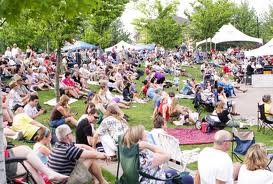
You know what gets me? There are some awesome examples of things that are working downtown. Party in the Park is a prime example. That event, working the way it did, should be looked at. It was a Probe. A safe to fail experiment in community building and connecting. Now we need to Sense and Respond. Why did it work? What about it worked? Did it fill a common need? What need did it fill? Does that need tell us something about community engagement? Does it's success tell us something about our community? Is there an opportunity to fill that need in another way, at another time, in another space? What else could work? How would we know if something else worked? What is the amplification strategy? If it doesn't work what can we do to stop or minimize? Don't go getting all "best practices" here or even "let's have a six month long, closed door, invitation only, inquiry". That's not what I'm suggesting. I wondering about entering into a process and mind set that facilitates learning in the present and uses that knowledge to create another safe to fail experiment. Party in the park was a safe to fail experiment that went well and will most likely continue to do well. Bulldozing part of the downtown core in the hope that some company somewhere might someday buy into the official city vision... I'm not so sure about that.

Saturday, August 21, 2010

Experimental Learning - Planning and Documenting


This is a model that was inflicted upon the 2009 Royal Roads Leadership cohort. I hated it. Literally hated it. It was possibly the hardest thing I have ever done. And it's quite brilliant lol.

The idea is to use experiences as a foundation for learning, which of course is what all experiences are. The brilliance is in the use of this model as an assessment of learning. It quite effectively places the responsibility for both the learning and proving of the learning on the learner.

Those with a background in counselling or human services will recognize the model as a representation of the counselling process. Client comes in with problem(s) in the form of negative or problematic experiences. As a counselor/helper you help the client reflect on the experience and provide feedback in the form of alternative perspectives. Then you help provide context perhaps embedding some theoretical perspectives about how human beings work. Then you help the client design a different way of doing something that relates to the original experience.

Simple, but not easy...

P.S.

Finally found out where this model originated - David A. Kolb's model of experiential learning http://www.infed.org/biblio/b-explrn.htm

Monday, August 09, 2010

Emerging Top 100 Tools for Learning 2010

Emerging Top 100 Tools for Learning 2010

My list is:

Twitter
VoiceThread
Camtasia Studio/Snagit
Prezi
SlideShare
PowerPoint
Wikispaces
Wordle
Ning
Moodle/Odijoo version

Saturday, August 07, 2010

Interdisciplinary Research Project at Kwantlen

Wordle: Blog post August 7 2010

This is one of those projects that has tremendous potential; both, potential success and potential pitfalls. One of the areas of potential pitfall lies within the very ethical framework that will serve as the foundation for the project.

“Our research will be conducted in the community, by the community, and for the community” in other words we are looking at a rhyzomatic, community as curriculum process. I have written before about how much I love this concept. I am also keenly aware that it comes with its own set of challenges and this post is my attempt to shine a light and explore solutions to one of those. If we can anticipate some of the potential problems at the onset we are less likely to fall into the pit.

Challenge number one, in my view, is around the idea that people don’t know what they don’t know. I don’t know who actually said that first (I’m lying, I do know, it’s bookmarked in my delicious somewhere, I’m just too lazy to dig it out and too aged to be able to pull it up from my mental hard drive) but it’s something that has rung true for me on more than one occasion.

I’ve been involved in a couple of educational projects that were open to the point of the becoming sink or swim learning. They were projects that had the best of intentions when it came to respecting the concepts of constructivism and the unique knowledge of the learners. Sometimes learners need some guidance, boundaries and help to bridge the gap from where that are to where they want to be. I think this is especially true when you add technology to the mix. If you don’t know that a tool even exists you are not likely to include it in your list of possibilities.

Of course the antidote to this is to embed laddering (see Bloom's Taxonomy), scaffolding (Brunner influenced by Vygotsky ) and mentorship into the learning process. Embedding those things into the process without losing sight of the essence of community as curriculum is an art form. It requires an instinct about what to show people and how to show it so that you plant a seed without overly priming them to think in a certain way and subsequently losing opportunities for them to learn outside of the box. The irony is that this process no matter how well intentioned is at best strategically influential and at worst manipulative. And yes, I struggle with this daily as a teacher, as a counselor and as a human.

The quandary for me is best described in this scene. You are walking along a path with a “learner” and you encourage them to go first, to discover the knowledge that is already there. Then you notice that they have taken a path that leads to a cliff. How long do you wait to warn them? Do you warn them? Or do you just let them fall? If you chose the last, I am never, ever going hiking with you.

Yes, I know, no one ever dies from a bad idea. Yet, people do, when they fail before they have built resilience and an understanding that failure is just feedback, develop a fear of taking learning risks. To me that is almost worse than a physical death. That is the death of potential.
Ok, so maybe I’m way over thinking this. I have been presenting on the Club of Rome’s mantras around learning by innovation and the value of anticipation and participation almost daily of late and that could be influencing me a bit more than it ought to. Or not…

The spark beneath this idea and igniter of the project is Ross Laird and he truly is a master at developing human potential. I know that with Ross's leadership this project is unlikely to succumb to the pitfalls that similar projects have encountered. So it's fitting to end this post with a Wordle of his summary of our first meeting. (I hope Wordling someone else's words is not a violation of blogging ethos?)

Wordle: Ross Laird's post on Interdisciplinary Research Project

Sunday, July 18, 2010

Sunday Musing on Meetings, Team Form and Function

I went to a meeting the other day. It was a meeting of minds. There were some extraordinary minds in the room and I have to admit that I developed a case of imposter syndrome that kept my usual disregard for the rules of engagement in check. Reflecting on the meeting, the agenda and the recorded notes (along with several other meetings of late), I find myself wondering about the meeting and team building process.

The reason for this particular meeting was to bring together a group of people who were interested in research and program development in a specific area. That area being to “help” a group of folks that traditionally struggle with education and training; the multi-barriered, the difficult to engage; those in recovery; the round peg people who don’t fit into the square peg classroom.

The other criterion, for invitation to this meeting, was an investment in creativity, working outside the box. It’s this second part that I’m reflecting on. It’s this second part that won’t leave me alone, it’s bugging me, irritating the inside of my skull and I know from experience that the irritation will not stop until I fully explore it and find some kind of solution at best, closure at worst. So here goes.

The meeting started pretty much like all meetings. After a bit of shuffling rooms we each introduced ourselves, in the usual meeting type way of reciting our business cards. This was an initial meeting so we spent most of our time very respectfully trying to articulate our purpose. I had a great, unshared, epiphany during this time. There are educators that do not Twitter, Facebook or wiki. I had managed to remain blissfully blind to that. It was a rude awakening.

Technology related differences aside the strand of thought that keeps running through my mind is a quote from Einstein. He said “We can't solve problems by using the same kind of thinking we used when we created them.”

If we want to do something creative, outside the box, innovative and un-traditional I am doubtful that sitting in a traditional meeting room, have a traditional meeting and following a traditional meeting script is going to move us toward that vision. There are too many mental models that get set to auto- play mode when we enter any kind of traditional space. It’s like we are all actors on a stage with a pre-defined script (nods to Shakespeare). If we are to do something different we need to stage it differently. To get people thinking outside the box you have to take the box away, shake them (us) up a bit so that the script they came in with gets lost or at least helps them forget their lines.

Interestingly we talked about doing that at a later date by staging an un-conference that includes the folks we are trying to provide the net for. I say “net” because in a way that is exactly what we are trying to do. We want to capture these folks in a net that can gently hold them long enough to allow them to create their own nets, be it a safety net, network of support or personal learning network.

For this to work well I think we need to use and model the same process. We need to have un-meetings, and by that I don’t mean we have to enter a state of complete chaos. I do think that we can look to leaders in the field of meeting and mental models for some ideas on how to do things a bit differently.

Patrick Lencioni author of Death by Meeting, The Five Dysfunctions of Teams and other great guides provides some usable ideas around having great meetings and building functional teams. He provides a model of the five dysfunctions of teams that begins with trust as the foundation. The absence of trust, emotional trust, and fear of being vulnerable has to be resolved so that the fear of open conflict doesn’t stall the team’s efforts. He goes on to suggest that teams that don’t embrace unfiltered conflict risk lack of commitment. Genuine buy-in only occurs when every possible dissention is voiced and worked through.

With these three foundational stones in place accountability and attention to results are more likely. Lencioni says “teams that trust one another, engage in conflict, commit to decisions, and hold one another accountable are very likely to set aside their individual needs and agendas and focus almost exclusively on what is best for the team”. In addition to the model he provides lots of exercises that can get any team to the alignment stage quickly and relatively painlessly.

Alignment is a word I associate with Peter Senge. In his book The Fifth Discipline: The art and practice of the learning organization he covers a massive range of thinking and process around using systems thinking to create organizations that embrace and manifest generative learning. His focus tends toward the Vision being the guide and he includes a discussion about attitudes toward vision that makes the distinction between commitment, enrollment and compliance. On the committed person he says, “The committed person brings energy, passion, and excitement that cannot be generated by someone who is only compliant. The committed person doesn’t play by the rules of the game. He is responsible for the game. If the rules of the game stand in the way of achieving the vision, he will find ways to change the rules. A group of people truly committed to a common vision is an awesome force” (p. 205).

Senge goes on the discuss alignment saying that alignment is the “necessary condition before empowering the individual will empower the whole team” (p.218). The easiest way to understand what he means by alignment is to think of great jazz musicians or winning basketball teams. There is a state of flow or a “groove” that happens on occasion that exemplifies true alignment. With jazz musicians and basketball players there is a set of skills that they need to master before they, as a group, can find flow. The same can be said about other kinds of teams.

The mastery of four skills- inquiry, reflection, dialogue and discussion - are the requisite skills of the types of teams I’m writing about. Chris Agyris, like Lencioni points to barriers that keep teams from reaching the critical level needed to achieve alignment and full functionality. Argyris talks about an internal script called “defensive routines” as being one of the chief barriers to learning and creating effective teams. Agyris teamed up with Donald Schön in the early 70’s and suggested that:

“...people have mental maps with regard to how to act in situations. This involves the way they plan, implement and review their actions. Furthermore, they assert that it is these maps that guide people’s actions rather than the theories they explicitly espouse. What is more, fewer people are aware of the maps or theories they do use (Argyris, 1980). One way of making sense of this is to say that there is split between theory and action.(http://www.infed.org/thinkers/argyris.htm)

The skills of inquiry and reflection can go a long way in exposing our own internal maps. However it’s usually through dialogue and discussion with others, ideally with those who are also skilled in these areas, that our hidden and often self and team-limiting mental maps can be more fully examined. To do this kind of work however begins with a team that has built the necessary foundation of trust, so they can embrace open conflict… and we’re back to Lencioni again.

Perhaps the best article I’ve read that relates to this is Dialogic Leadership by William Issacs. In this paper he outlines four actions that can and should take place in a team conversation. Issacs references David Kantor, a well-known family systems therapist saying that “Kantor suggests that some people move—they initiate ideas and offer direction. Other people follow—they complete what is said, help others clarify their thoughts, and support what is happening. Still others oppose—they challenge what is being said and question its validity. And others bystand—they actively notice what is going on and provide perspective on what is happening.”

He goes on to say that, “in a dialogic system, any person may take any of the four actions at any time. Although people may have a preferred position, each individual is able to move and initiate, to follow and complete things, to oppose, and to observe and provide perspective. None of these roles is better or worse than the others. They are all necessary for the system to function properly. As people recognize these different roles and can act on this recognition, they begin to create a sequence of interactions that keeps the conversation moving toward balance.”

By integrating the concepts of inquiry and advocacy to the 4-player model you get a fuller picture of the route to effective dialogue and discussion that can keep teams moving in the direction they want to go.

This is turning into a very long blog and I haven't even gotten to bio-teams and community as curriculum so I think I will end this here and continue in the next blog.

Saturday, July 03, 2010

Substance abuse and unemployment - literature review

Apologies ahead of time for the odd citation scheme...

This is a result of a brief survey designed to determine the percentage of unemployed individuals who are substance abusers. The survey was conducted over a three day period and is in no way an exhaustive or thorough treatment of the subject. The survey included a phone interview with a representative of the Chilliwack office of the Human Resources and Skills Development Canada (HRSDC) and a literature review.

The HRDC representative indicated that he could not locate any data that identified those with substance abuse disorders who were accessing assistance under the Persons with Disabilities (PWD) or the Persons with Persistent Multiple Barriers (PPMB) programs. He did acknowledge that there were probably many unemployed persons who would be considered “substance abusers” currently accessing these programs. The lack of easily accessible data around this does not necessarily mean that the HRDC data base could not yield this type of data, only that is was not accessible through that office at that time.

In reviewing the literature I found that there is substantial research that supports the theory that there is a positive correlation between substance abuse and unemployment. However quantitative data that would provide statistical information about individual’s concurrently experiencing unemployment and substance abuse was scant with only one major research study found that focused on Canadian data.

The Canadian Center on Substance Abuse published The Costs of Substance Abuse in Canada 2002 as an aid to understanding and interpreting the original report of the same name, written under contract by Rehm et al., (2002, 2006). This document and the original report focused on the costs of substance abuse with one of the costs being the indirect costs associated with loss of productivity. “By comparing average income levels reported by those with a substance abuse problem and those without a substance abuse problem, it is possible to calculate the difference, which becomes an economic cost attached to illness and injury linked to substance abuse” (Rehm et al., 2006). Productivity loss was further defined as short and long term disability attributed to substance abuse.

In 2003 the productivity loss due to substance abuse overall was calculated to be $24 billion or 61% of the total social costs. The cost of loss of productivity, due to long-term disability was calculated to be approx. $6 billion due to alcohol abuse and 4.4 billion due to illegal drug use. (Rehm et al., 2006).

Following are excerpts that pertain to the question of - What percentage of unemployed individuals also abuse substances?

According to a 2002 United Nations report … there is a correlation between unemployment and prevalence of substance use in many countries; and prevalence of illicit drug use is higher among younger age groups (18-25 years of age) in practically all countries.1

Goodman and Hankin presented their research findings that examined “both direct and indirect impacts of alcohol consumption on labor force participation and income, with controls for drug abuse and smoking (2006).

… study uses the recently collected National Epidemiologic Survey on Alcohol and Related Conditions (NESARC), designed to be the primary source for information and data on the U.S. population for alcohol and drug use. The NESARC provides multi-dimensional information on alcoholism, drug abuse, and cigarette smoking, as well as excellent individual and labor market information.

Separate analyses by gender show that alcohol use significantly impacts the choice between part-time and full-time employment. Heavy drinkers are more likely to be unemployed or part-time workers compared to lighter drinkers or abstainers. In contrast, alcohol use has an insignificant impact on income conditional on employment.

Conclusions: The labor force impacts of alcohol and substance abuse are complex. The alcohol impacts are most pronounced with respect to labor force participation, and full- v. part-time employment. Drug use has its major impact on men with respect to labor force participation (less likely to be full-time) and health (worse health). Women who use drugs are also less likely to work full-time and will have worse health. 2

Renwick and Krywonis (1992) suggest that unemployment for substance abusing individuals is “much higher” than the averages for unemployment rates in North America citing statistics by the Addiction Research Foundation which produced a mean annual rate of 36.9%. However these statistics were from data collected from 1986-89.

It is a recurrent and well-documented theme in the addiction literature that unemployment and vocational instability are serious problems among persons who abuse substances (Gardiner, 1978; Peachey, & Franklin, 1985; Waldo, & Gardiner, 1984).

Annual intake records between 1985 and 1989 for the Addiction Research Foundation (Clinical Institute) in Toronto, Ontario indicate that unemployment for this population is much higher than the current average rates for North America (Addiction Research Foundation [ARF], 1986, 1987, 1988, 1989). For the 14,659 substance abuse clients reporting their employment status during this period, the mean annual rate of unemployment was 36.9% (ARF, 1986, 1987, 1988, 1989).

Employment difficulties for individuals who abuse substances are related to both obtaining and maintaining work (Renwick & Krywonis, 1988; Yates et al., 1988).

A retrospective interview study of clients admitted to a treatment facility for substance abuse intervention demonstrates drastic declines in vocational productivity over the year prior to their treatment (Gardiner, 1978). This research also indicates that vocational stability, measured in terms of the number of jobs held, is generally poor during this period.

Another study focused on maintaining employment following residential treatment for addiction suggests that employment stability deteriorates markedly from one month post-discharge and onwards (Waldo & Gardiner, 1984). This research underscores the need for particular attention to "job survival" (Gardiner, 1978, p. 502) skills.3

Dooley and Prause measured the impact of unemployment and underemployment on alcohol misuse in the National Longitudinal Survey of Youth concluding that job loss increased risk of alcohol misuse.

… these results confirm previous findings that job loss can increase the risk of alcohol misuse, provide new evidence that two types of underemployment (involuntary part-time and poverty-level wage) can also increase this risk and suggest that these effects vary over time.4


In the Journal of Health Economics, MacDonald and Pudney published results of their research on Illicit drug use, unemployment and occupational attainment (2000).

… we find compelling evidence to suggest that drug use, particularly the use of opiates, cocaine, and crack cocaine, is associated with an increased risk of unemployment, regardless of age or gender.5

In a study titled, Barriers to Employability Among Women on TANF With a Substance Abuse Problem researchers found that women who abused substances spent more time on welfare that non-substance abusing women.

In a comparison of cumulative total years receiving welfare benefits for the substance abuse and non-affected samples. The substance abuse sample spent significantly more total time on welfare than the non-affected sample.
On average the substance abuse sample spent 12 years (SD=8.5) versus 5.8 years (SD=5.5) for the non-affected sample. Research also indicates that groups differed for long and short stays on welfare. About 36% of substance abusers received welfare benefits for more than 15 years versus only 7% of the comparison sample. Conversely, 66% of the non-affected sample received welfare benefits less than six years versus 28% of the substance abuse sample. (see here for full report)

In the 2002 National Survey on Drug Use and Health, Substance Abuse and Mental Health Services Administration (SAMHSA) reported the following:

• Current employment status was highly correlated with rates of illicit drug use in 2002.
o An estimated 17.4 percent of unemployed adults aged 18 or older were current illicit drug users compared with 8.2 percent of those employed full time and 10.5 percent of those employed part time.
o Of the 16.6 million illicit drug users aged 18 or older in 2002, 12.4 million (74.6 percent) were employed either full or part time.
o Most binge and heavy alcohol users were employed. Among the 51.1 million adult binge drinkers in 2002, 40.8 million (80 percent) were employed either full or part time.
o 12 million (79 percent) of the 15.2 million adult heavy drinkers were employed.

• Among Unemployed Adults the rate of drug use was higher among unemployed persons compared with those from other employment groups.
o 17.4 percent of unemployed adults (18 and over) reported current drug use.
o Binge and heavy alcohol use rates were higher for unemployed persons (34.7 and 13.3 percent, respectively, for binge and heavy use) than for full-time employed persons (29.0 and 8.4 percent, respectively).6

References

J. Rehm, D. Baliunas, S. Brochu, B. Fischer, W. Gnam, J. Patra, S. Popova, A. Sarnocinska-Hart, B. Taylor. In collaboration with E. Adlaf, M. Recel, E. Single
The Costs of Substance Abuse in Canada 2002 March 2006 http://www.ccsa.ca/2006%20CCSA%20Documents/ccsa-011332-2006.pdf

Single, E., Robson, L., Xie, X., and Rehm, J. (1996). The Costs of Substance Abuse in Canada. Canadian Center on Substance Abuse, 75 Albert Street, Suite 300, Ottawa, Ontario, Canada K1P 5E7.

1. United Nations Office for Drug Control and Crime Prevention, Global Illicit Drug Trends 2002, New York, 2002, p. 213-14. As cited in The Policy for the New Millennium: Working together to redefine Canada’s drug strategy interim report of the special committee on non-medical use of drugs. Paddy Torsney, M.P. Chair December 2002

2. Goodman, A. C. and Hankin, J. R. , 2006-06-04 "Employment and Income Effects Related to Drinking with Controls for Drug Abuse and Smoking: Analysis Using the NESARC Database" Paper presented at the annual meeting of the Economics of Population Health: Inaugural Conference of the American Society of Health Economists, TBA, Madison, WI, USA . 2009-05-25 from http://www.allacademic.com/meta/p89538_index.html

3. Renwick, R M., Krywonis M., 1992. Personal and Environmental Factors Related to Employment: Implications for Substance Abuse Intervention. The Journal of Rehabilitation, Vol. 58

4. Dooley D, Prause J. (1998) Underemployment and alcohol misuse in the National Longitudinal Survey of Youth. J Stud Alcohol. 1998 Nov;59(6):669-80.
Department of Psychology and Social Behavior, University of California, Irvine 92697, USA

5. MacDonald, Z, Pudney, S., Illicit drug use, unemployment, and occupational attainment, Journal of Health Economics, Volume 19, Issue 6, November 2000, Pp.1089-1115, ISSN 0167-6296, DOI: 10.1016/S0167-6296(00)00056-4. (http://www.sciencedirect.com/science/article/B6V8K-415RGRX-D/2/25325048818b5f76c2b2b0bcc6bc56de)

6. Substance Abuse and Mental Health Services Administration, Results from the 2002 National Survey on Drug Use and Health: National Findings, September 2003.

Saturday, April 10, 2010

The Law of Diffusion of Innovation Game

"The Diffusion Simulation Game was created in the Department of Instructional Systems Technology at Indiana University Bloomington. This Web version was led by Dr. Ted Frick with designers Barbara Ludwig, K. J. Kim and Rui Huang. The DSG is based on a board game originally developed by Dr. Michael Molenda and Patricia Young, and is based on research on diffusion and adoptions of innovations."

Wikipedia has more info on the Law of Diffusion in Innovation, really cool, might even interest the "cautious adopters" out there (I didn't like the label originally used for that group).

I'm an early adopter in most areas. I like.. no, love change, the new, different, innovative. This sometimes has it's drawbacks. I have, with no doubt, stressed out more than one co-worker with my need to find "better" ways to do things that were actually working ok just the way they were.

This week I have to decide on a research project for my Interdisciplinary MA. A topic that incorporates Leadership, Learning and Technology and that I can insinuate into my professional life and most importantly one that can hold my crow like attention for a year.. Wait.. what's that shiny new idea over there?

I think there may be a link here to a project that will fit well and meet the criteria I am looking for. More later. Heading to Saskatoon to teach Violence Prevention program for the week.

Thursday, March 25, 2010

Using Humour in Education

A long time ago, far, far, away... Ok, a couple of years ago and just down the road, I facilitated the Breaking Barriers program along with two other programs, 5 days a week at three jails for three years. This is one of the "resources" we actually used in Breaking Barriers which was designed by a "consumer of correctional services" aka Gordy Graham. We used a video series produced by Gordy but the story in this clip of Hyrum Smith was part of that series.

I like this style of humour, where the "learning object" in embedded and explicit in the story and the humour is sprinkled throughout to season the narrative making it much more palatable and memorable. Research has shown that our brain tends to remember ideas associated with stories and with humour.

Humor has the ability to capture the attention of the brain. “Emotion drives attention and attention drives learning.” (Sylwester, 1995) Learners need to pay attention in order to learn and humour is one way to capture attention while maintaining the relaxed alert state that is optimal for learning (Caine, et al, 2009).


There was another story, in the Breaking Barriers series, about where beliefs come from told via story about a young married couple and the cooking of a ham that I was trying to find. No luck but if I get a chance today I might try to record it myself.

Sunday, February 21, 2010

Harm Reduction - An Invitation to Dialogue

This is an invitation to dialogue about Harm Reduction. Before I lay out the groundwork for this dialogue I’d like to provide a short introduction to the container, Voice Thread.

If you’ve never used Voice Thread please be assured that it is very easy to use. The big triangle shaped arrows located at the bottom right and left of the screen move you through the slides. There are seven slides in this Voice Thread.

Each of the slides contains some content in the form of questions. Although Voice Thread is typically seen as a visual format, often used in art education, I have purposefully not included visuals. I did this because I did not want to prime or influence the viewer. I am trying really hard not to advocate for any one perspective rather I am hoping that each visitor will share their own unique views relatively removed from my own personal agenda in this area.

The slide topics are:

1. An Invitation to Dialogue – Title Slide
2. What is your understanding of the term Harm Reduction?
3. The Good, the Bad and the Ugly – Questions about the pro’s and con’s, in your view.
4. How do you use Harm Reduction
5. Morality and Ethics
6. What else? – Add “other” stuff here.
7. Stories – An invitation to share stories about Harm Reduction

In the centre bottom of the Voice Thread screen is a button that says “comment”. When you click on this you will see options to comment by phone, voice recording, video, type or upload a prerecorded comment. I will try to include exemplars of video, audio and text and hopefully others will provide more as the thread evolves.

Please do not feel obliged to comment on all the slides or for that matter on any of them. Listening without commenting is also a form of participation. Do feel free to embed or link to this Voice Thread on your own blog or website. This application is built for sharing.

A couple of things to know about the recording options, first they start recording automatically after a few seconds, so be ready to speak. Second, you can delete and do over.

A few thoughts about Dialogue

Dialogue is a Greek term that means “flow of meaning”. It is essentially “an enquiry that surfaces ideas, perceptions and understanding that people do not have already” Issacs, 1999, p. 2). In this Voice Thread, the invitation is to dialogue and to take part in a process of enquiry.

There are four important processes and abilities that dialogue perpetuates. The first is to evoke people’s genuine voices. This means both speaking your own voice and encouraging others to do the same. This invitation is to add your genuine and authentic voice.

The second is to listen deeply. Really listening is hard work, most of us don’t listen really well. Instead we hear and while hearing think about what we want to say in response.

The third equally difficult ability is to genuinely respect others. This, for some, involves adopting the belief that there is coherence to all views. My friend Jane Katz uses the phrase “That makes perfect sense based on what you have experienced” in a program she teaches on managing emotions. Respect is about privileging all voices, not just the ones that sound like our own.

The fourth involves suspending that which we are certain of. If we want to expand our own perspective, to make it larger, more able to encompass the whole, we may have to un-attach ourselves from our truth for a period of time. To achieve dialogue requires integrating these four practices.

In my mind the practice of dialogue is similar to the activity of Rhizomatic Education or Community as Curriculum as put forth by Dave Cormier (n.d.).

A rhizome is type of root defined as being a “horizontal, usually underground stem that often sends out roots and shoots from its nodes” (Rhizome, n.d.). I have adapted Dave’s suggested Rhizomatic premises below as a possible foundation of understanding for this process.

1. Experts do not create knowledge; it is co-created by individuals through dialogue and reflection. (Reflection being an internal dialogue)
2. Those facilitating the process suggest the context and create any needed scaffolding to contain the issue, which I have attempted with the questions on the slides.
3. We all have our own resources and our own unique experiences to draw on.
4. Collaborative, community led processes allows us to be more creative with our combined knowledge.

These ideas are not yet fully formed in my own mind so any feedback on them would be welcome. Right now I am seeing the questions on the slides as being like the nodes on a rhizome. I can easily shift to seeing each person being a node however.


So, again, welcome and let the dialogue begin…


References


Cormier, D, (n.d.) Dave’s Educational Blog. Community as Curriculum – A Research Project. Retrieved February 20, 2010, from http://davecormier.com/edblog/category/rhizomes/

Issacs, W (1999). Dialogic Leadership [Electronic version]. The Systems Thinker, 10(1)
http://www.dialogos.com/resources/files/systhink.pdf

Rhizome - definition from http://www.thefreedictionary.com/rhizome accessed February 20, 2010